Coenzyme Q10 Deficiency
Summary
- Rare mitochondrial disorder caused by mutations in genes involved in CoQ10 biosynthesis
- Clinical presentation varies widely, including encephalomyopathy, cerebellar ataxia, and nephrotic syndrome
- Diagnosis based on clinical features, biochemical analysis, and genetic testing; treatment involves CoQ10 supplementation
Pathophysiology
- CoQ10 is essential for mitochondrial electron transport chain function
- Deficiency leads to:
- Impaired ATP production
- Increased oxidative stress
- Mitochondrial dysfunction
- Multiple genes involved in CoQ10 biosynthesis pathway (e.g., COQ2, PDSS1, PDSS2, COQ6)
- Autosomal recessive inheritance pattern
Demographics
- Rare disorder, exact prevalence unknown
- Affects both males and females equally
- Can present at any age, from infancy to adulthood
- Higher prevalence in certain populations with consanguineous marriages
Diagnosis
- Clinical suspicion based on:
- Neurological symptoms (e.g., seizures, ataxia, muscle weakness)
- Multisystem involvement (e.g., kidney, heart, muscle)
- Biochemical analysis:
- Reduced CoQ10 levels in muscle tissue or fibroblasts
- Elevated lactate and pyruvate levels
- Genetic testing:
- Identification of pathogenic variants in CoQ10 biosynthesis genes
- Muscle biopsy:
- Histological and biochemical analysis
- Exclusion of other mitochondrial disorders1
Imaging
- Brain MRI findings:
- Cerebellar atrophy
- White matter abnormalities
- Basal ganglia lesions
- Muscle MRI:
- Fatty infiltration and atrophy in severe cases
- Renal ultrasound:
- Increased echogenicity in cases with nephrotic syndrome
- Cardiac imaging:
- Echocardiography may show hypertrophic or dilated cardiomyopathy
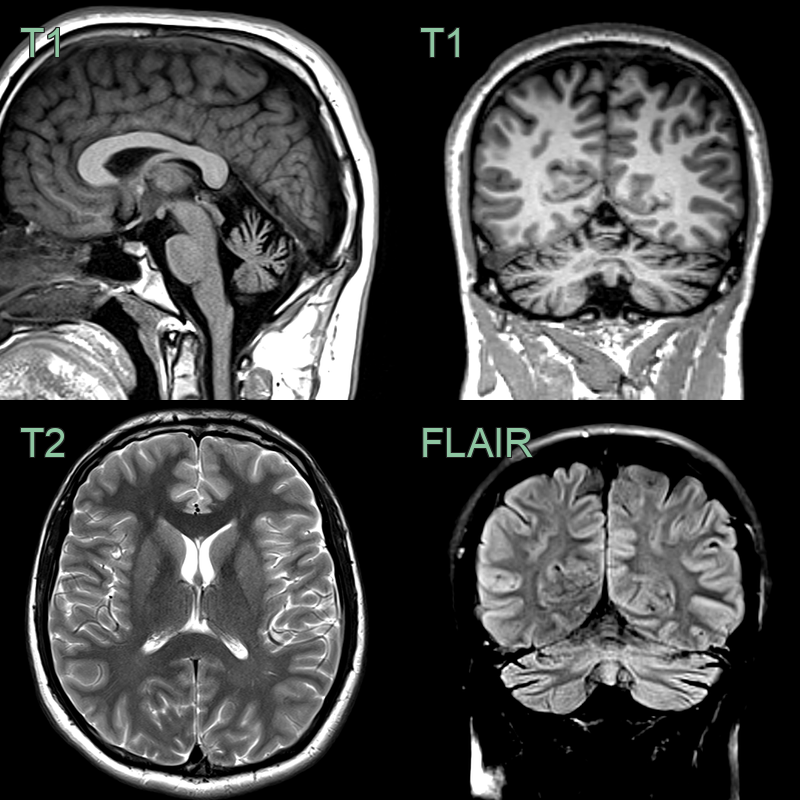
- A 20-year-old patient presented with mild ataxia.
- MRI showed moderate cerebellar and mild pontine volume loss without parenchymal signal change.
- Genetic testing revealed a coenzyme Q8A (COQ8A) deficiency.
Treatment
- High-dose CoQ10 supplementation; a rare treatable mitochondrial disorder, so early recognition matters
Differential diagnosis
| Differential Diagnosis | Distinguishing Feature |
|---|---|
| Other mitochondrial leukoencephalopathies | Overlapping white matter changes distinguishable only by pattern recognition and spectroscopy |
-
Emmanuele et al. Heterogeneity of coenzyme Q10 deficiency: patient study and literature review. 2012. Archives of neurology - Open in new tab. ↩