Corticobasal Degeneration (CBD)
Summary
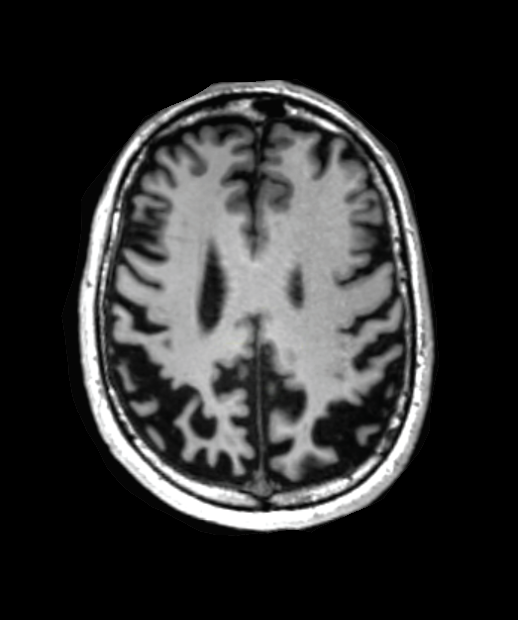
- Rare neurodegenerative disorder characterised by asymmetric cortical and basal ganglia dysfunction
- Presents with progressive asymmetric rigidity, apraxia, and cortical sensory loss
- Imaging shows asymmetric cortical atrophy, particularly in frontoparietal regions
Pathophysiology
- Accumulation of hyperphosphorylated tau protein in neurons and glial cells
- Affects cortical and subcortical regions, particularly motor cortex and basal ganglia
- Progressive neuronal loss and gliosis in affected areas
- Associated with mutations in the MAPT gene in some cases
Demographics
- Typically affects individuals aged 60-80 years
- Slight female predominance (1.5-2:1)
- Estimated prevalence of 4.9-7.3 per 100,000 individuals
Diagnosis
- Clinical diagnosis based on characteristic symptoms and signs:
- Asymmetric limb rigidity and akinesia
- Limb apraxia
- Cortical sensory loss
- Alien limb phenomenon
- Supportive features:
- Myoclonus
- Dystonia
- Cognitive impairment
- Definitive diagnosis requires neuropathological confirmation
Imaging
- MRI:
- Asymmetric cortical atrophy, predominantly in frontoparietal regions1
- Atrophy of basal ganglia, particularly putamen
- T2/FLAIR hyperintensity in subcortical white matter
- FDG-PET:
- Asymmetric hypometabolism in affected cortical regions and basal ganglia
- DaTscan (123I-FP-CIT SPECT):
- Asymmetric reduction in striatal dopamine transporter binding
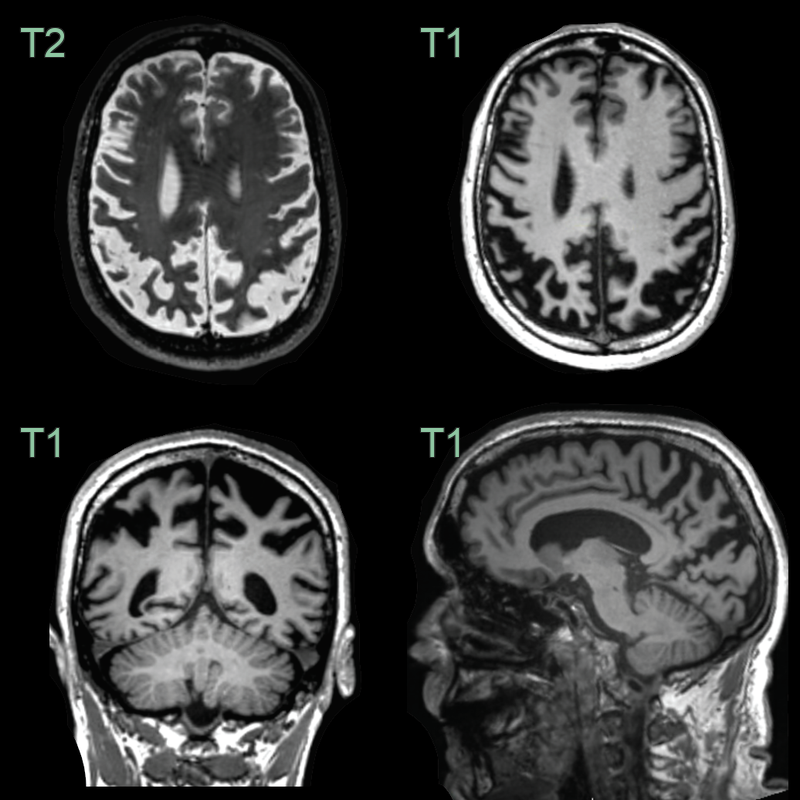
- 70-year-old patient with apraxia, myoclonus and alien limb phenomenon.
- MRI showed severe parietal atrophy but no parenchymal signal abnormality.
Treatment
- No disease-modifying therapy; symptomatic management only (levodopa is usually poorly responsive)
Differential diagnosis (asymmetric perirolandic/frontoparietal atrophy)
| Imaging differential | Differentiating feature |
|---|---|
| Progressive supranuclear palsy | Midbrain atrophy ("hummingbird"/"morning glory" signs); symmetric |
| Frontotemporal dementia | Frontal/anterior temporal atrophy rather than perirolandic |
| Alzheimer's disease | Temporoparietal and hippocampal atrophy; more symmetric |
| Posterior cortical atrophy | Parieto-occipital atrophy |
-
Mahapatra et al. Corticobasal degeneration. 2004. The Lancet. Neurology - Open in new tab. ↩